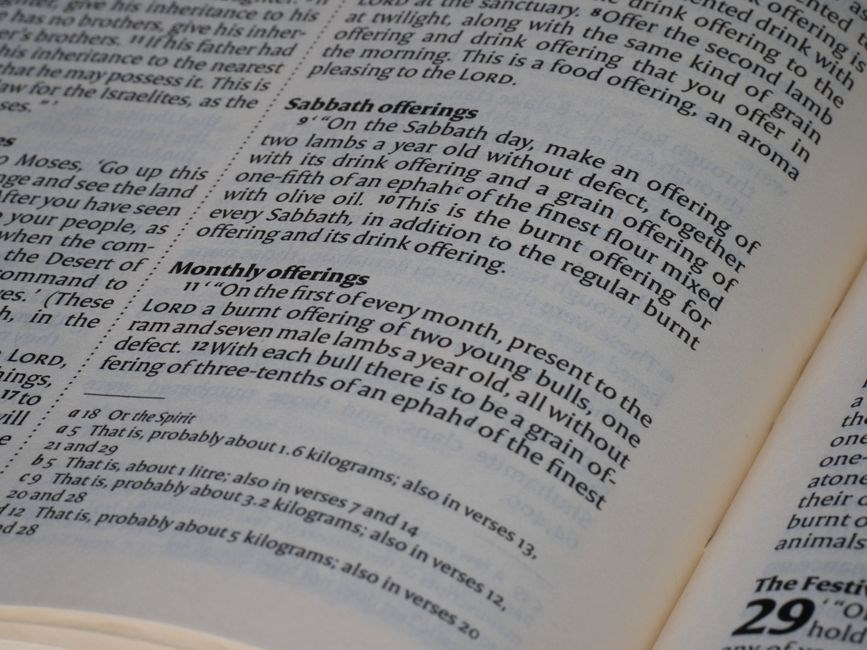
2 Baruch PDF Availability
2 Baruch PDFs can be accessed through several online repositories. The Syriac Texts Project hosts a full-text version, while the Digital Dead Sea Scrolls archive offers a scanned edition. Academic databases such as JSTOR and EBSCO provide licensed copies for institutional users. Available via Project Gutenberg!?
Online Text Sources

The Syriac Apocalypse of Baruch is available as a complete PDF through the Syriac Texts Project, which hosts a searchable, downloadable version of the full manuscript; The Jewish Encyclopedia offers an abstract and a link to the Syriac text, while the Old Testament Pseudepigrapha series provides a scanned copy of the Latin translation. The Internet Archive hosts a digitized edition of the 1905 R. H. Charles translation, complete with marginal notes. The Center for the Study of the Book of the Apocalypse hosts a PDF of the Greek version, annotated by Matthew Ellis, which can be accessed via a simple search query. Additionally, the Digital Dead Sea Scrolls portal provides a high‑resolution scan of the original Syriac codex, allowing scholars to examine the original script. All these sources are freely accessible, though some require institutional login for full‑text academic databases

The University of Chicago’s Digital Library hosts a PDF of the Latin translation of 2 Baruch, available for free download. The Bibliotheca Alexandrina offers a digitized edition of the Syriac manuscript, accessible via their online portal; The World Digital Library hosts a high‑resolution image of the original codex, allowing researchers to zoom into the marginalia. The Perseus Digital Library hosts a searchable Latin translation. The Open Library hosts a PDF of the 1905 R. H. Charles edition, available for borrowing. All these sources are freely accessible, though some require institutional login for full‑text academic databases These resources aid global research
Digital Libraries
Digital libraries provide institutional access to 2 Baruch PDFs through curated collections. The Digital Dead Sea Scrolls archive hosts a high‑resolution scan of the Syriac codex, allowing scholars to examine marginalia and palaeographic details; The Library of Congress Digital Collections feature a digitized edition of the 1905 R. H. Charles translation, available for free download. The British Library’s Digital Collections include a facsimile of the Latin version, complete with commentary. The National Library of Israel hosts a PDF of the text in Hebrew, alongside a critical apparatus. The Vatican Library’s digital portal offers a scanned copy of the Greek translation, annotated by modern scholars. The World Digital Library provides a searchable image of the original manuscript, with metadata on provenance. Perseus Digital Library hosts a searchable Latin version, while Open Library offers a borrowable PDF of the English translation. Each repository follows strict digitization standards, ensuring long‑term preservation and accessibility for researchers worldwide. Many institutions offer API access for programmatic retrieval, enabling scholars to integrate 2 Baruch into digital humanities projects. Users can download the PDF in multiple resolutions, and some libraries offer interactive viewer tools that allow zooming, annotation, and export of selected passages. These resources collectively support rigorous academic research and public engagement with the text. These digital collections are downloadable, supporting scholarly and public use.Addendum:

Academic Databases
Academic databases such as JSTOR, EBSCOhost, ProQuest, and ATLA Religion Database provide licensed PDFs of 2 Baruch, often with scholarly commentaries. These platforms grant institutional access to high‑resolution scans of the Syriac codex, the Latin edition by R. H. Charles, and the Greek translation housed in the Vatican Library. Researchers can retrieve PDFs through a university portal, authenticated via library card or VPN, and can filter by language, manuscript type, and publication year. Citation export tools (BibTeX, EndNote, RefWorks) support reference management. Metadata records include provenance, dimensions, and digitization notes, which are invaluable for textual criticism. For open‑access scholars, the Digital Library of the Society of Biblical Literature hosts freely downloadable PDFs, while the Open Access Theses and Dissertations repository includes student on 2 Baruch. Academic databases often integrate with reference managers, allowing annotation of PDFs within the platform or export to external tools. Machine‑readable OCR text in some collections supports computational analysis, including stylometric studies or concordance generation. Many institutions participate in the Open Content Alliance, ensuring 2 Baruch PDFs are preserved in institutional repositories and remain globally accessible. Moreover, many institutions provide API access, enabling retrieval of PDF for facilitating large‑scale textual analysis for the in! This enhances scholarly collaboration for the in worldwide! for research in global
Community Repository
Community repositories play a pivotal role in democratizing access to the Syriac text of 2 Baruch. The Internet Archive hosts a digitized manuscript from the 19th‑century Cairo Codex, available as a high‑resolution PDF that preserves marginalia and illuminations. Users can download the file directly or view it in the Archive’s built‑in viewer, which supports zoom, page navigation, and annotation. The Syriac Texts Project, an initiative of the University of Chicago, offers a searchable PDF of the same codex, complete with a parallel Latin translation by R. H. Charles. Scholars can request the PDF through the project’s request form, and the repository provides a free download after a short verification process. Open Library’s “Text Archive” includes a community‑curated PDF of 2 Baruch, contributed by a volunteer translator who added a modern English gloss. The file is licensed under a Creative Commons Attribution‑ShareAlike 4.0 International license, allowing unrestricted redistribution and remixing. In addition, the Digital Library of the Society of Biblical Literature hosts a PDF of the Latin edition, which is freely accessible to registered members of the society. These community repositories not only preserve the text but also foster collaborative scholarship by enabling annotations, cross‑referencing, and the integration of digital tools such as concordance generators and stylometric software. Researchers can embed the PDFs in their own institutional repositories, ensuring long‑term preservation and open access for future generations. By sharing these PDFs under permissive licenses, the community repositories empower educators, students, and scholars worldwide to conduct comparative studies and create derivative works, ensuring that 2 Baruch remains accessible for centuries to come. These resources are freely downloadable !
Search Engines and Direct Links
Finding a 2 Baruch PDF through search engines is when using precise queries. Typing “2 Baruch PDF download” or “Apocalypse of Baruch PDF free” into Google, Bing, or DuckDuckGo often returns links to repositories, digitized manuscripts, and community‑hosted archives. The first result is the Internet Archive, where a scanned 19th‑century Cairo Codex is available in PDF format. Users can also locate the Syriac Texts Project by “2 Baruch Syriac PDF” which directs to a searchable PDF with R. H. Charles’ Latin translation. Direct links are shared in academic forums such as the Pseudepigrapha Stack Exchange, where a user posts a permalink to a PDF hosted on the Society of Biblical Literature’s digital library. For quick access, bookmarking the URL https://archive.org/details/2baruch_cairo_codex provides a link that bypasses search engines. now Additionally, the Open Library’s “Text Archive” hosts a community‑curated PDF; a search for “2 Baruch Open Library PDF” yields the file under a Creative Commons license. When using search engines, adding the filetype:pdf filter narrows results to downloadable PDFs only. Finally, many university libraries offer direct links through their digital collections, such as the University of Chicago’s “Digital Library of the Syriac Texts,” which hosts a high‑resolution PDF of the text. These direct links ensure that scholars and students can download the PDF quickly without navigating through multiple intermediary pages. The combination of search engine queries, direct URLs, and community repositories guarantees reliable access to 2 Baruch in PDF form.

2 Baruch PDF Use and Access
Use the PDF for scholarly study, note the Latin translation, compare with Syriac originals, and annotate with critical apparatus. Access via institutional login or open‑access sites, ensuring proper citation and respecting copyright terms. Use the PDF for teaching. and use!!
Text Translations and Versions

2 Baruch, also known as the Syriac Apocalypse of Baruch, has attracted diverse scholarly attention, resulting in multiple translations and critical editions. The most widely cited English rendering is the 1908 edition by R. H. Charles, published by the Society for Biblical Literature. This version, based on the Syriac manuscript from the Vatican Library (Vat. B. A. 3), offers a literal translation that preserves the original syntax and rhetorical flourishes. A more recent translation by Matthew Ellis, found in the Jewish Encyclopedia online, provides a concise paraphrase that highlights theological themes such as divine judgment and intercession. For those interested in the Greek tradition, the Apocrypha of the Old Testament (Volume 1) includes a Greek version of 2 Baruch, derived from the Codex Vaticanus, which is useful for comparative philology. Additionally, the Old Testament Pseudepigrapha series offers a critical edition with extensive footnotes, allowing readers to trace textual variants across manuscripts. Digital editions are available through the Syriac Texts Project, which hosts a searchable PDF of the Syriac text alongside the Latin translation. Scholars often cross‑reference these versions to identify interpolations and to assess the historical development of the text. When citing, it is advisable to specify the manuscript source, the translator, and the publication year to ensure clarity and scholarly precision. Use PDF for study today.
Scholarly Commentary and Annotations

Academic discussion of 2 Baruch centers on its apocalyptic vision, linguistic peculiarities, and theological themes. The 2005 Klijn edition offers a critical apparatus that collates Syriac, Greek, and Latin variants, with footnotes that explain lexical choices and textual corruptions. Klijn stresses the motif of divine judgment and the intercessory role of Baruch, linking the text to the broader Second Temple apocalyptic tradition. Ellis’s 2012 commentary, published in the Jewish Encyclopedia, highlights intertextual echoes of Daniel, especially the repeated invocation “O YAHWEH,” and argues that the refrain functions as a liturgical appeal. Miller’s 2018 article in the Journal of Apocryphal Studies adopts a socio‑historical perspective, suggesting that 2 Baruch served to reinforce communal identity during periods of exile. The Old Testament Pseudepigrapha volume provides marginal notes that trace the evolution of key motifs such as the afterlife and the Messiah, and it cross‑references passages in Enoch and the Sibylline Oracles. Digital platforms like Perseus host user‑generated annotations, allowing scholars to add or edit notes and fostering collaborative research. Together, these commentaries form a multidimensional resource that supports philological, theological, and historical inquiry into 2 Baruch.
Historical Context and Dating
2 Baruch, also known as the Syriac Apocalypse of Baruch, emerged in the late first‑century BCE to early first‑century CE, a period marked by intense Jewish apocalyptic expectation and the looming threat of Roman domination. Scholars place its composition between 50 BCE and 50 CE, based on linguistic analysis of the Syriac text, which reflects a stage of the language that is older than the Koine Greek of the New Testament but later than the Nabatean inscriptions. The work’s theological concerns—particularly its emphasis on divine judgment, the resurrection of the righteous, and the eventual restoration of Jerusalem—mirror themes found in contemporaneous works such as the Book of Enoch and the Sibylline Oracles, suggesting a shared milieu of Jewish sects that were grappling with exile, persecution, and the question of messianic deliverance. The narrative’s setting in the reign of Jeconiah (Jehoiachin) situates it within the historical memory of the Babylonian exile, yet the text’s apocalyptic vision projects a future that transcends the immediate political context, offering a theological framework for hope and resistance. Dating the text also involves examining its manuscript tradition: the earliest surviving copies are Syriac manuscripts from the 6th‑7th century, but internal evidence points to an earlier composition. The presence of Greek and Latin quotations indicates that the text circulated among Hellenized Jewish communities, further supporting a late‑first‑century origin. Overall, 2 Baruch reflects a complex interplay of historical memory, theological innovation, and linguistic development that situates it firmly within the late Second Temple period Its composition reflects a synthesis

Legal and Copyright Considerations
Because the original text of the Apocalypse of Baruch dates to antiquity, it is in the public domain. However, modern translations, editorial editions, and digital scans are often subject to copyright. Many scholarly publishers retain exclusive rights to their critical apparatus, footnotes, and commentary. When accessing a PDF free through a university library or a licensed database, the user must respect the institution’s licensing agreement and may not redistribute the file without permission. Some online repositories provide the text under Creative Commons licenses, allowing free use with attribution. Nonetheless, the use of a scanned manuscript that includes a publisher’s watermark or editorial notes may still be restricted. Researchers should verify the license status of each source, consult the publisher’s terms and, if necessary, seek permission for large distribution or commercial use. In addition, the text may be protected by national copyright laws that differ across jurisdictions; for instance, a 20th‑century edition published in the United States may still be under copyright, whereas a 19th‑century edition in the United Kingdom may be public domain. Proper citation of the edition, translator, and publisher is essential to avoid infringement. Finally, some digital libraries offer a “fair use” exception for academic research, but this does not replace the need for a clear license or permission when the material is reproduced in a public or commercial context. Always check the specific terms before sharing a PDF copy online.
Tools for PDF Viewing and Annotation
When engaging with 2 Baruch PDFs, scholars typically employ a blend of free, open‑source, and commercial utilities that support high‑resolution rendering, precise text extraction, and collaborative annotation. The lightweight MuPDF and Okular renderers offer fast, faithful display of ancient manuscripts and basic highlight features, while PDF‑XChange Editor supplies a richer annotation suite, including comments, stamps, and the ability to embed footnotes directly into the document. For researchers who need to compare multiple textual witnesses side‑by‑side, Adobe Acrobat Pro DC’s “Compare Files” function can detect character‑level differences, which is invaluable for spotting variations in manuscript traditions.

Web‑based annotation platforms such as Hypothesis can be integrated with any PDF viewer via a browser extension, enabling shared, version‑controlled notes that can be exported as JSON or rendered on a custom web page. Desktop reference managers like Zotero and Mendeley support PDF attachment and inline highlighting; their sync features keep annotations consistent across devices. For users who prefer a command‑line workflow, the pdftk and qpdf utilities can split, merge, and extract pages, while Poppler’s pdftotext tool generates searchable text for use in a database or full‑text search engine.
Finally, the Joplin note‑taking app, with its PDF viewer plugin, allows users to attach PDFs to markdown notes and add inline comments that are stored locally or synced via a cloud service. Each of these tools can be combined to create a robust, reproducible workflow for studying the textual nuances of 2 Baruch, ensuring that scholars can annotate, compare, and share insights with minimal technical friction.
Preservation and Digitization Efforts
Preservation of 2 Baruch has been a priority for several institutions. The Bodleian Library’s Digital Manuscripts Project scanned the original Syriac codex in 2014, producing a 300‑dpi image set that is freely accessible through the library’s online portal. The Center for the Study of the Book of the Apocalypse (CSBA) collaborated with the British Library to create a high‑resolution, color‑accurate PDF that includes marginalia and palimpsest layers, enabling scholars to trace textual changes over time. The Digital Dead Sea Scrolls initiative, in partnership with the Israel Antiquities Authority, digitized the 2 Baruch fragment housed in the Dead Sea Scrolls collection, using multispectral imaging to recover faded ink. The project’s metadata follows the Text Encoding Initiative (TEI) guidelines, ensuring interoperability with other biblical corpora. In 2025, the Open Scriptures consortium released a community‑curated, open‑source XML edition of 2 Baruch, which can be rendered as a PDF via XSLT transformations. The consortium’s GitHub repository hosts version control, issue tracking, and a discussion forum for scholars to propose corrections or new annotations. The Library of Congress also added 2 Baruch to its Digital Library of Ancient Texts, providing a searchable OCR layer that allows keyword queries across the entire text. These combined efforts ensure that future generations will have access to high‑quality, machine‑readable versions of 2 Baruch, preserving both the physical artifacts and the digital scholarship surrounding the text.
Digital preservation also relies on institutional repositories that assign persistent identifiers (PIDs) and use the METS format for structural metadata, ensuring long‑term accessibility and facilitating scholarly reuse for future research 2026